Pages

Tuesday, December 15, 2015

Terrible Tragedy Reminds Us of What's Important


I know where I was when I heard about the San Bernardino shooting on Wednesday. I was teaching violin at the time, and I received a text from my mom asking whether I’d heard about it.
I didn’t immediately register what I read. It didn’t even occur to me that it could have been a recent occurrence. I thought it was something that might have happened months or years ago — it is hard to tell tone from a text message, you know?
So I messaged back almost 45 minutes later to ask where and when it occurred, and then something clicked.
I realized that San Bernardino is in California, which is only about an hour from where someone I know was attending school.
All this made me realize something. In the aftermath of the shooting, the whole thing was completely (and prematurely) politicized. The response was predictable and political: pro-guns versus anti-guns, pro-refugees versus anti-refugees, pro-Muslim versus anti-Muslim, Right versus Left, and so on and so forth.
As with the last mass shootings in the U.S., we lost perspective so quickly.
That’s not to say that these issues are not important, but they are actually secondary to the issue at hand — that 14 people died. They are the ones we should look at FIRST and focus on—not the murderers who are getting so much media attention, not guns, not one political party or another. Those are things we should address in the future, perhaps, but not in the first hours after an attack.
The world lost 14 people on that Wednesday. These 14 people will not finish out the year. They will not see those they cared for grow up and work hard and make them proud. They will not see their children grow up and work hard and make them proud. They will not be there to see their spouses and friends and family grow old. They will not grow old.
They will not be home for Christmas or any holidays, including the New Year.
This season is a time for joy and family and remembering all of the blessings of the year. Yes, holidays often come with stress because people feel obligated to spend more and more and pretend they are happy when they are not — but Christmas and the surrounding holidays are ultimately about being thankful for our blessings. Even in the midst of stress, we have countless blessings.
I can’t say what the blessings are for the families that were shattered by this shooting. That is a tragedy of horrific proportions, and nothing can soften that. I firmly believe that some good must come of this, because it must, but those words won’t lessen the pain and grief of the afflicted families.
However, I will say this: The shooting in San Bernardino renewed my gratitude for everything and everyone around me. I am thankful for my parents, for my brothers and sister, for my coworkers, for my friends, for my health and for all of the things that have been given me. I could lose any or all of those things in a single moment. I myself could die or lose my health and mobility or, God forbid, my family and friends, at any time.

However, the only thing I can say now is that you and I are here now by the grace of God, for however long we are given, and that is something to be thankful for. 

Friday, November 20, 2015

Out of Our Control


Horror movies play on our fear of helplessness. If you’re anything like me, the terror comes because someone or something else is in control of what happens, and whatever is in control is usually malevolent.
This translates to our everyday lives as well. Take a glance at the self-help section in any bookstore or library, and you will be inundated with suggestions for taking control of your life. According to them, if we learn perfect self-control, we will be confident, successful and in happy.
But it’s not actually very healthy for us to be in absolute control. In fact, we have a number of names for controllers. Tyrant. Dictator. Bully. Abuser. Terrorist. Control freak. Manipulator. Obsessive-compulsive. Anorexic. Gym nut. Workaholic. Alcoholic. Suicide. The list goes on and on.
“But wait,” you say. “Some of those names don’t describe controllers. They describe addicts –— people controlled by something or someone else.”
That’s true — but it’s not for the reasons you might think. In fact, the more we seek control over something, the more that thing grasps us in a vise-like grip. It becomes our obsession, our addiction. And, before too long, we have to either recognize that we are now controlled by yet another thing in our lives, or we must continue to falsely believe we are in control.
I face that a lot myself. I yearn for perfect self-control. I want the perfect figure, the right interests, the ability and focus to do my work perfectly. There’s a reason I cared so much about grades from high school through college; grades were my control of choice. I felt I could control my life if I just studied and worked hard enough. For the most part, the hard work paid off, but those times I did poorly were absolutely crushing.
I read a Washington Post article last week titled “What I’m learning from my son’s eating disorder” by David Bachman. Bachman’s son suffers from anorexia nervosa and is in his third inpatient treatment program, so Bachman only gets limited visits with his son. In one visit, he got 60 minutes — and his son alternated between expressions of hatred for his father and bitter sobs nearly the entire time.
Bachman’s response was, “Remaining calm and in control was my best ammunition to not placate the eating disorder voice controlling his mind.”
In Bachman’s mind, self-control is the cure for this mess, but what he really doesn’t get is that excessive self-control actually caused this mess. He believes his son is controlled by an eating disorder, but what he doesn’t realize is that this sort of illness usually starts as a very deliberate one.
I’ve read several books with protagonists struggling with eating disorders, and if there’s anything I’ve learned from them, it is that people with eating disorders are under the illusion that they are in control — perhaps because that may be the only form of control they think they can have in their lives. But, before long, the obsession to lose weight becomes the controlling force for their every thought and action. Some become suicidal or cease to care about their lives at all. That’s not evidence of being in control. That is evidence of having lost control.
Two weeks ago, I attended a conference in Fort Wayne, Indiana, called the Ethics of Infertility Symposium. It was designed for those who want to know more about issues like barrenness, adoption, in vitro fertilization (IVF) and snowflake adoption. (Snowflake adoption is adoption of frozen embryos.)
What I took away from that symposium is that we all-too-frequently believe we can control fertility and infertility. The prevailing belief is that women can control when they get pregnant — if not naturally, then with the help of science. But success rates for IVF are less than 30 percent, according to several websites, and, according to the Guttmacher Institute, 51 percent of women who have abortions were using contraceptives when they became pregnant.
In 2011, a little more than 730,000 abortions were reported to the Center for Disease Control; half of that number is 365,000. That’s not even the total number of children conceived when their mothers were taking birth control. That’s just the number of children who were killed because the birth control didn’t work. And even that number is incomplete—some states do not report abortion statistics to the CDC.
This is not evidence of control. This is a massive, nation-wide illusion of control. If we could truly control fertility or infertility, every IVF procedure would be successful the first time with the first embryo. No one would become pregnant unexpectedly. There would be no abortions. No one would ever suffer miscarriage or infant loss — in fact, death would be foreign to us.
But we don’t have control — and does that matter? Well, here’s the important part: if God exists, He is, by definition, in control and, if he has created us in the first place, He has our best interests in mind, no matter what evil we see in the world. If you had “fearfully and lovingly” made anything, would you destroy it on a whim?
To me, that’s the opposite of a horror movie. In horror movies, the controlling force wishes us harm. But if a loving God is in control, even when bad or unexpected things happen, well, that’s the situation I want to be in. If He gives us what we need and what is for our good, then I can relinquish control without fear.

I can even trust that some good will come out of the monstrous evil in the world, including ISIS, because the God who would die for you and me and even for Hitler and ISIS terrorists, and then rise from the dead, is the One I want to be in total control of my life. 

Friday, October 30, 2015

October Awareness Month


October is Awareness Month. Awareness of what? Well, let me list a few observances:
Breast cancer, dwarfism, eczema, domestic violence, disability employment, Down syndrome, SIDS, pregnancy and infant loss, liver cancer, Alzheimer’s, lupus, Raynaud’s, selective mutism, dysautonomia, AIDS, celiac sprue, Rett syndrome, hunger, blindness, dyslexia, emotional intelligence, ADHD, diversity, bullying prevention, critical illness, depression, medicine abuse, RSV and spina bifida.
There are a few other things, but those are most of the highlights. All 29 of them. (I don’t count Vegetarian Awareness Month as a highlight.) The exact number varies depending on which website you visit, but that’s the gist of it.
I don’t have anything against awareness. It is important. What does concern me is that everything is compartmentalized, including awareness. It is important to know about these things and how they affect people, but we are practically forced to pick and choose which things to support. Awareness suggests a broader understanding and compassion, but I see only a narrowed field of focus.
Let’s face it; there are a lot of really hard things in life, and a lot of those things are very difficult to learn about. We don’t like feeling uncomfortable, and we don’t like heartache. Our lives revolve around the pursuit of comfort and happiness.
So, unless someone waves a ribbon in front of our faces and forces us to think about statistics and people who have been hurt or killed or isolated by something, we don’t want to do that. Even then, once the designated time for ribbons and awareness walks has passed, we generally go back to ignoring the problem — and nothing changes.
We feel good because we have taken a walk or two and shared some Facebook statuses and maybe had a couple of eye-opening conversations, but, by and large, we close our eyes again at the end of the month or even the day (a lot of causes have only a single day).
Part of the problem is we think in abstractions. We have hundreds, maybe even thousands, of “friends” we have never met, may never meet and rarely, if ever, talk to. We know people from the images and articles they post, not their family and friends and interests.
As such, we increasingly want to categorize things and people. It becomes a really bad habit. Look again at that list of things to be aware of, but this time, think about people when you look at the list.
People with breast cancer. People with Down syndrome. People who have suffered miscarriages or who have lost a child to SIDS. People who have disabilities. People who are blind. People who are bullied or are bullies. People who are depressed.
We are still categorizing. (Although this is still better than saying “depressed people” or “disabled people” or “blind people.”)
Now try inserting a name in there. Think about one person you know. Does that person fit into a single category? Does he? Does she?
Have you defined anyone by a single category?
 I know I have far too often.
Thinking about myself, I’ve lost a family member to breast cancer, I have friends and family members who have suffered miscarriages, I know people with ADHD and doctors thought I would have spina bifida before I was born. In fact, doctors pressured my parents to abort me because they suspected spina bifida. That diagnosis, that one category, could have defined me and my lifespan.
The worst thing is actually that we like to define a person with one category, and if it’s one of the most drastic categories, we define them by that. And thus, you and I are in very real danger of defining people by the one thing they might most want to change in their life.
My grandmother had her doctorate, was a dedicated teacher for her whole life, raised four children and loved traveling the world. But it’s sometimes all too easy to remember her life in terms of her two-year fight with breast cancer. Never mind that she had more than 60 years of life and experiences and struggles and achievements before that.
So we have a tendency to define people by the worst things in their lives, and that becomes a stigma.
No wonder we don’t want to talk about trauma. No wonder we don’t want to get help sometimes. As well-intentioned as it is, “awareness” can become this huge magnifying glass that puts that one aspect of our lives in high definition for the whole world to see, while it allows us to ignore the rest of what makes us human.
We sometimes even fall into the trap of thinking we can change our own identities (again, usually based on a single issue), but we are very complex creatures. And when we start thinking that way, we forget that we and everyone else has myriad strengths and weaknesses and interests and fears and dislikes and passions. And we are in danger of losing our ability to have real relationships.

So be aware, but, even more, care.

Friday, October 9, 2015

Martyrs Second to Guns?


Last week, nine men and women were martyred in the United States.
Martyred.
You won’t hear or see that word on the news. You will learn that the gunman had 14 guns, and you might learn that those nine victims were all killed because they said, “I am a Christian,” but you won’t hear the word “martyr.”
Instead, martyrs are coming in second place to guns in the aftermath of the Oregon school shooting.
That is because the word “martyr” takes the issue far beyond gun regulation. Guns did not cause this disaster. Yes, we have heard from dozens of sources, including Pres. Barack Obama, that gun regulations are at fault.
According to Pres. Obama, the reason nine people died is because the shooter was allowed to get guns without a background check.
No, Pres. Obama. With all due respect, the reason nine people died is because, according to survivors’ testimonies, a man chose to go into Umpqua Community College and ask a classroom of fellow students, a teacher and two emergency responders their religion. He decided their fates — death or injury — based on their answers.
And nearly all nine of the men and women who died proclaimed Christianity.
Let me list the names of the victims: Lucero Alcaraz, 19; Treven Taylor Anspach, 20; Rebecka Ann Carnes, 18; Quinn Glen Cooper, 18; Kim Saltmarsh Dietz, 59; Lucas Eibel, 18; Jason Dale Johnson, 34; Lawrence Levine, 67; and Sarena Dawn Moore, 44.
We are reputed to live in the land of the free. Now, for the first time since Rachel Scott’s martyrdom at Columbine, peaceful men and women have been killed in the United States for no other reason than that they proclaimed Christianity as their faith.
These people were in a classroom. Most were there to learn. They were armed with pens and paper — and their faith that there is more than this world. They were armed with the belief that God, the Creator and Author of Life, came to earth and died for the sin of mankind, including their own murderer.
So the world grieves for these martyrs. Yet even as we mourn the deaths of these brave men and women, we are in danger of forgetting that they were, in fact, brave.
They had courage beyond comprehension.
Of those nine men and women, eight likely knew that to say, “I am a Christian,” meant they would die. They would never return to school. They would never see their family or friends again.
And they said yes anyway.
I think a lot of us probably find that courage to be incomprehensible. Why would they do that? Why not just say no and live to proclaim another day?
One girl had the opportunity to play dead and hide her cross tattoo, as she was one of the first to be shot, and she is now a living witness to the events. Why did the nine martyrs not seek a similar opportunity?
Well, because God died and resurrected. And because He didn’t say no. Last week’s martyrs were certain that a God who cares enough to undergo crucifixion for his sinful, fallen, unfaithful creatures loves them enough to take care of them whether they live or die.
And that was their sure and certain hope.
My hope is that, if I am ever faced with that choice, I will be faithful enough and courageous enough to say yes to the same question, no matter what the consequences. Because I believe that the time is coming in which each one of us will have to make a choice. We will have to decide and then proclaim where we stand.
Our lives will hang on the line, and we will have to make a choice between our lives — or livelihoods — here on earth and our eternal lives.

But we can live in hope no matter what happens and no matter what tragedies unfold.

Wednesday, August 12, 2015

Book Review: "Deep Blue" by Jennifer Donnelly

Deep Blue (Waterfire Saga, #1)Deep Blue by Jennifer Donnelly
My rating: 1 of 5 stars

Rated PG.

Do you see that really short list of bookshelves/tags? That's short for me, and that usually means bad things. It's especially bad when I say "the series is not getting better" for the VERY FIRST BOOK IN THE SERIES.

This book is living proof that a beautiful cover does not a great book make. Actually, the cover was the ONLY reason I kept reading this book. I kept thinking, "I just read a book with a very similar cover (Of Poseidon), and I loved it! It has to be related!"

Wrong. That is a major logical fallacy, and I know it and you know it and everyone knows it. It just took 264 pages before I couldn't take Deep Blue anymore.

So what went so wrong? What on earth went so wrong? Let's list the reasons:

1. Clichés.

Oh, how I hate clichés. And Deep Blue has SO MANY. Girl feels rejected by her mother. Girl hates the idea of totally antiquated arranged marriages (I mean, that is SO 1200 years ago!). Girl falls in love with the boy she is arranged to marry. Girl is supposedly dumped by said boy and is told by her friends that she is "too good" for him anyway. Prince turns out to be a total loser and player. Girl who has unbeatable Sistahood of awesomeness, complete with slang and rebelliousness.

And who can forget the epic quest of five superhero teenagers, all brought together by some mysterious prophecy that will lead them to save the world? Also, the transmitters of said prophecy are reputed to be scary bedtime stories. Nearly all five of the separate super-awesome girls has to overcome doubts about the reality of their hoodoo dreams. And the bad guys are destroying the environment, kill the heroine's parents, and kidnap entire villages of merfolk with very little reason whatsoever! What can get awfuller than that?

2. Made-up lingo.

How much made-up lingo and sea-related puns am I expected to endure? Zee-zee, bing-bangs, chillawonda, kanjaywoohoo, caramalgae, currensea, etc. Admittedly, that last one is pretty funny. But too many convoluted, made-up words tend to get a little annoying and distract from the overall story. A few can create setting. Too many (or maybe it’s too many syllables), and I start to get bored.

3. Pretension.

By that, I mean that the story is intended to sound smarter than it is because of Latin. Really, Latin would be fine, except it's not used for anything of substance. It's just as vacuous as everything else. Also, there is Portuguese and the like. I mean, it's cool to have multiple languages used in a YA book, but please don't insult my intelligence with this weird combination of Portuguese, Romanian, Latin, English, and sea slang.

In the prologue—not even at Chapter 1, but the Prologue—we get a massive stage-setting with the Romanian river witch singing English verse, then saying a whole lot of things in Romanian. Again, it’s cool, but it’s a rather interesting way to open the book. I guess it works, but something about it was just a bit off-putting. (Really, are they switching languages constantly, or are they only talking/singing in Romanian and Donnelly is just haphazardly translating?)

I have actually found that a lot of books that use Latin or other languages use them subtly. You know—fantasy books like that tend to use it without drawing attention to it. However, Jennifer Donnelly waves a giant neon flag all over, saying, “LOOK! I’M USING LATIN! LOOK AT ME!” On page 28, one of the characters says, “Why? Quia Merrow decrevit! That’s Latin. It means ‘Because Merrow decreed it.’” And in the next line, she says, “Dokimí is Greek for trial, and a trial it is.” The next page, we get a baronessa telling us that the Latin cantare is the root word for chant, enchantment, canto and incantation.

We get Latin and Greek in just a few lines, and neither one is, in my opinion, warranted. Especially if we need infodump to learn what the languages are, much less what they mean. But (and note this), we do NOT get an explanation as to why mermaids actually use all these human languages. They don’t have their own language; they have a haphazard amalgamation of various ancient human language. Evidently, though, there is no explanation needed for this.

4. Bad poetry. I am not a huge fan of poetry in novels because poetry is usually not within the skill set of the author.

Ack. That sounded really, really harsh.

But please! If you decide to write a prophecy in verse, hold to some modicum of consistency! On page 4, we read the prophetic verse of five stanzas. The rhyme scheme is AABB CCDD EFGF HIJI KLML. It totally SWITCHES halfway through the poem! I don't care if the first two stanzas are about uniting Adventure Pals and the others are about siccing said Adventure Pals on the bad guy before disaster! IT'S STILL PART OF THE SAME POEM.

Oh, and that's not even touching on the issues of meter! I did not take an entire semester of Shakespeare and another semester of literary criticism to let that go to waste. The stresses are so inconsistent.

5. Inconsistencies. Major, irredeemable inconsistencies.

Every so often, I felt that Donnelly and her editor forgot that the story takes place under water. This is especially evident when the heroine has to take a bath and then when she and her girl squad get underwater makeovers. They. Are. Under. Water. That means that when you get dirty, the current usually tends to wash you off. Right?

To be fair, the heroine’s fin doesn’t stop bleeding when she is injured. That’s fairly realistic. (Then again, wouldn’t merfolk have some sort of quicker blood coagulation to compensate for the water?)

But the other stuff—really. The heroine escapes at high speed from a bad situation, and when she is rescued, she is given a room. And the first thing she does is take a breath of relief and…wash off. Yup. She washes off all that grime. But wait; wouldn’t the water she was swimming through have washed off grime and gunk and blood and whatever? I mean, she wasn’t burrowing in silt on the sea floor. I guess that’s something I don’t have to care about.

But then—holy kanjaywoohoo. The heroine and her girl squad get underwater makeovers for disguises. Hair dye, makeup, new clothes, the works. The heroine gets her hair dyed black with squid ink, and her hair is cut to frame her face. Realistically, when applied underwater, that ink would get a lot of places in addition to her hair, and her hair would, presumably, float around her face instead of framing her cheekbones. Then she gets black squid ink squirted on her lips and on her eyes for lipstick and eyeliner/mascara, with “a silvery dusting of ground abalone shell” for her cheeks. Again, the squid ink would get in her eyes and on her face and on her pretty clothes and EVERYWHERE, or it would just wash off, and the abalone shell would, again, wash off, assuming you could even miraculously put it on while in the water. Another girl bleaches her hair blonde. Um. Isn’t bleach kind of poisonous? Do you mean to tell me that merfolk are using bleach for cosmetics underwater, that is, in the same water they breathe? And so on and so forth. It is just not logically feasible.

I like mermaid stories, but if you’re going to write a mermaid story, you have to put some effort into remembering that everything has to be done underwater. Go swimming for an hour or two, try to do ANYTHING with your hair—including a ponytail—and then experiment with underwater makeup while the lifeguards aren’t looking. Also try on a dress or new clothes underwater and figure out the drapery issues. Go ahead. I dare you. Test those underwater logistics.

These are just my biggest beefs with Deep Blue. I know it’s not completely Donnelly’s fault—her editor really did not do her job right—but there are a lot of things that make this story unpolished. But it doesn’t have to be great literature to be a decent read. I mean, I just finished reading Of Poseidon and The Iron Fey series. And they were fun. Yes, they were almost embarrassingly hormonal and had quite a lot of drama, but they were relatively well executed. I liked the characters (for the most part), and the stories were intriguing, and the settings were fascinating, and they were just good yarns with a couple of halfway decent themes swirled around in there. Deep Blue, on the other hand, was just a mess.


To conclude, here is my tribute to Deep Blue:

"To sea or not to sea, that is the question:
Whether 'tis merlier in the fins to suffer
The zee zees and bing-bangs of invincible Fortuna
Or to pit songspells against a sea of troubles,
And by opposing end them: to dry, to weep
No more. And Quia Merrow decrevit!
These kanjaywoohoos are so good!"

View all my reviews

Monday, July 27, 2015

Loving Parents and Babies Both

A matching set of kimonos for 20-week
infants. The outfits are about 6.5" tall, or a
little shorter than
an adult's hand.
Since 2011, an organization called Teeny Tears has existed specifically to provide clothing for infants too small for infant and preemie clothing available in stores. Thus far, over 130,000 tiny handmade diapers have been donated by volunteers and over 1,000 hospitals have been served. The mission is to share hope and encouragement for those suffering infant bereavement.
About 1 in 4 pregnancies end in miscarriage (loss of the baby before the 20th week), and of those, 75% end within the first trimester. 1% of pregnancies end in stillbirth (infant loss after 20 weeks). That means that there are countless women who have undergone infant loss, and most of them are suffering in silence. This is particularly true for the mothers of the children lost in the first trimester, who often feel as if they are not allowed to grieve.
Talking about death is always uncomfortable, and the fact that miscarriage often occurs when a child is considered “not viable” (unable to survive outside of a mother’s womb) means that many people feel like no one will understand their grief. After all, a common response to an infant death is something along the lines of, “There was probably something wrong with it,” or “It’s probably for the best.”
As anyone knows who has dealt with grief, responses like this do not help; rather they make the grieving person feel invalidated—but grief doesn’t work like that. No matter how tiny, frail, and helpless an infant is, even when he is the size of a pea or a baby carrot, families who have lost children still feel grief. That infant, no matter how small, is a part of the family.
Many women who volunteer for Teeny Tears have personal stories either of leaving brokenhearted with nothing or of leaving with some comfort with pictures, footprints and tiny diapers. The women all remember their experiences vividly, either with grief and regret when they were given nothing or with gratitude and even joy with those who experienced compassion and understanding from hospital staff and volunteers.
I have personally been involved in this and other related organizations for some years, and my specialty is knitting kimonos for infants between the ages of 16-22 weeks’ gestation (around 4-5 months). There are no clothes or diapers that can fit these tiny angels who can fit in the palm of a hand.
A pair of outfits for boys between
20-22 weeks' gestation.
The unconditional love expressed by those involved in organizations such as Teeny Tears, though, is sharply contrasted with the apathy and even cruelty of organizations such as Planned Parenthood. Instead of cherishing and nourishing an infant’s life and celebrating each day, abortion clinics fuel fear, worry, and self-interest. Parents feel that they can’t bear the burdens, that this isn’t the right time, that it would be best for the child not to live. And so fragile infants are poisoned, dismembered and crushed in the name of love and parenthood.
The nation has been shocked in the past week by the release of two videos. Each video has been released twice: once in a full unedited version and once in a much shorter edited version. Both Dr. Deborah Nucatola and Dr. Mary Gatter are Planned Parenthood clinic directors and abortion doctors, and they were filmed by undercover operatives discussing the sale of aborted fetal organs for profit.
I have been absolutely appalled by the most recent developments with Planned Parenthood, but it really should come as no surprise. After all, when a life is devalued-- but the cost of its parts go up, even the most innocent and helpless life is threatened. Death is not more merciful than life, no matter how hard that life is.
That is why organizations like Teeny Tears exist. They seek to cherish life and to comfort families, leaving them with more than empty hands when they leave the hospital. Teeny Tears is also founded in hope—hope that all infants will know they are loved and may meet their families, and also hope that they will live. They leave families with some measure of joy and remembrance and peace, even in the midst of their heartbreak and grief.

Several kimonos for girls, a blanket, and several diaper sets. Diapers are donated in matching sets so that parents may
keep one and dress their baby in the other in the case of bereavement.

Tuesday, July 7, 2015

Book Review: "Shadows" by Robin McKinley

ShadowsShadows by Robin McKinley
My rating: 3 of 5 stars

Rated PG-13.

Well, that was confusing.

But not as confusing as Franz Kafka (whose short story The Metamorphosis I read earlier this evening as well).

And kudos to the math book and origami. Those were the best things ever. I love origami, although I am not very good at it. Algebra is also pretty good (although I understand why some people hate it), and the thing with the shadows was inspired. Spot-on fabulous!

All the same, this is, sadly, not one of McKinley's best. I love parts of it, and I was absolutely enthralled with some of the worldbuilding...but only the magical part. I was not at all happy about the proliferation of ridiculous lingo, some of which has...bad connotations in real life. I know McKinley is aware that the term "f-word" has a distinctly nasty connotation in English, so using that term to mean something along the lines of "foretelling" should be a no-no. Her editor should have vetoed that. McKinley should have vetoed that--because it has no place in this novel. None whatsoever.

Lingo rant aside...actually, never mind. I need to rant about the lingo some more.

Just for the record, I hate books like Feed, which rely almost exclusively on profanity and made-up terminology, especially for worldbuilding. Granted, I may be being slightly unfair there...but I still feel that too much linguistic modification detracts from rather than enhances a story. As far as I'm concerned, one hallmark of good writing is usually that the words disappear to make room for the story. When the words take center stage, the world vanishes to make room for the words. Sometimes this can be okay to create setting, but, on the whole, new lingo should be used very sparingly indeed. I love long, complicated words as much as any other linguaphile, but they have a time and a place, and such words are created for specific purposes. Words such as "bugsucking" and "dreeping" and the like are just distracting.

And by using so much new terminology, Robin McKinley seems to me to be regressing. It makes me so sad! So very, very sad! I love, love, LOVE The Blue Sword. It is my #1 top read book. There are some made-up words like kelar and dalgut and things like that, but they are very fitting. They are subtly inserted. They make sense and they enhance the story.

On the other hand, words like bugsucking don't enhance anything. I really hate having to figure out an array of new expletives. If you're going to make up words, make them worthwhile. Please. PLEASE.

Also, if you insist upon creating a huge list of new words specifically for a single novel, please have the decency to add regular footnotes or at least a glossary. Or explain them more than once, because if you use the term "f-word" repeatedly but only explain it once, guess what your audience is going to think every time you use that word without explanation? Yes. It practically takes mental gymnastics to follow that particular train of thought. That said, that was the general idea that McKinley was getting at, but I knew it meant something else and I really, really wanted to remember what it meant in the story, but I read it SO MANY TIMES before I remembered the meaning!

Dear writers, your job is to make it feasible for your readers to follow your story [fairly] easily. At the very least, don't make the language so complex that it's difficult to figure out what the story is. And if the story itself is complex--no. Just--please. Have mercy on your readers.

Because if you elect to obfuscate certain aspects of the work of art to which you have presumably contributed and perchance are assumed to have created for the purpose of appreciation and enjoyment, then you may experience some confusion and disappointment as a result of your deliberate density.

Also, this book felt way too much like a typical teenage novel. It just kills me. My favorite books by McKinley are The Blue Sword and Beauty, and I used to like The Outlaws of Sherwood a lot, too. I also really like Chalice, for some reason. None of those books are really the stereotypical teenage fare, but somehow, this one felt like that. Let me count the ways:

1. Whiney teenage girl as narrator
2. Love triangle (um, sort of. That doesn't really get cleared up all that well). Also, this love triangle involves a hot werewolf and a hot white magician from another country. Meet Jacob and Edward, except Jacob wins in this universe.
3. "Evil" stepdad (not really, but that's the first impression)
4. Werewolves

Well, there aren't 25 sin counts, necessarily, but four is still far too many, because these are big ones. Come on, McKinley! You can do better than Twilight! (Can't you?)

Finally, I need to mention one more thing. I don't like the foggy writing technique very much. Robin McKinley does it really well, I will admit, but I prefer the clear writing technique. What is foggy writing, you ask? Foggy writing is when you have entire sections in which everything is described in such a way as to obfuscate stuff. So when the main character repeatedly sees sparkles and then shadows and patches of nothingness, and then she folds worlds so that "up is down and down is nothing," that is disorienting. Perhaps purposefully disorienting, but disorienting. So I guess that that is good writing--to make the readers feel like the main characters are feeling--but if you don't like that sort of thing, most of Robin McKinley's books aren't for you. I include in that list Sunshine, Deerskin, Dragonhaven, and Spindle's End.

And is this or is this not supposed to have a sequel? Because I sincerely hope it won't. That said, McKinley has, for some unknown reason, ceased to create definite singletons and has started writing first books of series which never come to fruition.

View all my reviews

Friday, June 19, 2015

School Libraries in Real Life (Summer Edition)

I just spent the last week in Logan, Utah for a School Library Media practicum to finish up my minor. Wow. That was really interesting. Some days were boring, some were hard work, and some were fun, but I finally met most of the the classmates and teachers with whom I have worked since last fall. I even got my first taste of college life!

So for any of you who want to know what school libraries are all about, I learned that it's all about the people. Sure, a lot of work goes on behind the scenes (and I mean A LOT of work!) to make a library accessible, functional, and attractive, but it's really all about the patrons. The goal of a good school librarian is to connect with students and to create a safe environment in which kids can tap their creativity and interest and curiosity. Ideally, it is a place that kids can also get away from the testing. Granted, kids also have to take tests in the school library because it is also called the school library media center (meaning it has computers), but you know those books that libraries are known for? They are there for patrons. I even saw an early edition of The Jungle Book shelved in one of the middle schools we visited. Isn't that awesome? Well, okay, I wouldn't read it because it's old and I'd freak out about maybe damaging it, but still.

And the libraries are so different. Every single one we visited was so very different from the others, and it really came down to the librarians. One high school librarian had blue streaks in her silver hair. A public school librarian had us figure out how to circulate paddle boards. Another librarian showed us the wonder of book labeling to help patrons find the books that match their interests. I really want to label all of the things in my personal library now! I thought it was all just so fun (except for the extensive tours of the databases, which I don't know if I will ever actually get to use).

What it made me realize is that there are so many facets to book/media production. I am really, really interested in book production especially. Can you imagine the work that goes into writing, editing, designing, producing, marketing, selling, buying, cataloging, and sharing a single work? Doesn't it blow your mind that we have so many things readily available? It's worth thinking about.

Sunday, May 31, 2015

Music and Relationships

I think that love must be like music.

No, I'm not talking about trite old sayings like "my love is like a red, red rose." That's all very well, but you must explain the analogy for it to make sense. Do you mean that your love is like a thorny, bug-bitten rose? A new bud that is barely peeping out? A tired, dry rose that is still red? A rose painted red by the cards of the Queen of Hearts? A rose accompanied by long, spiky thorns that hook your clothes and tear your hands? And don't even get me started on the many varieties of the color red.

What I mean is that love is more like playing the violin.

I'm a violin teacher to anywhere between eight and eighteen students of various ages, depending on the month, year, and sometimes week. If there is anything I have learned, it is that learning the violin requires dedication and creativity and, more often than not, someone to help you along the way.

Most people I have talked to love the violin - its sounds, its melodies, its soul. It has a sweet and pure sound that is unlike almost anything else. I have had people call me and say that they have always wanted to learn the violin; how long will it take to learn [this song] just like the recording?

Anyone who has ever learned the violin has a few responses to choose from for this question. 1) A shrug or a confused look. 2) A vague saying like, "It depends on how long/hard/well you work at it." 3) Maniacal laughter (generally avoid this response). But I digress...

You see, music is built upon two things: love and hard work. You can work all you like at something without loving it, and you can become competent or even brilliant but never give the music its soul. (*Cough Jascha Heifetz cough*). On the other hand, you can love music passionately but neglect practice, preferring for your innate love of the music to give you brilliance rather than time and effort and practice to develop your ability and comfort with the instrument. This approach may eventually lead to a decrease in your love for the music/instrument. Neither method really, truly works to make music, as far as I am concerned. (Perhaps I'm missing something here, but if I am, feel free to excoriate me in the comments.)

However, if you have a love for the music and instrument and the perseverance to practice it daily, miracles happen. You fall in love with the instrument and with music more and more, and, even as you make countless mistakes, you start to do things right more often and regularly create that sound you have been pursuing for what feels like forever. And you end up making MUSIC as it is meant to be.

No, it is not all fun and games. There have been times that I have thrown my music on the floor in frustration. I have screamed and I have cried and I have very nearly decided to give up entirely. I have gone through so many slumps it is not even funny. But I keep working on learning how to play the violin, even after seventeen years. And even though I'm not a top-notch musician (it might have something to do with all those times I went into a slump, a.k.a. didn't practice), I still love playing my violin. Even more, I love practicing. Well, actually, I hate practicing until I practice, at which point I love practicing even more and want to do it the next day.

This has been a really long-winded explanation, but I do have a point. As I said, I think that love is like music. It doesn't have to be romantic love, by any means. It could be friendship or it could be your relationship with your parents or siblings. It could even be a working relationship with your coworkers. Either way, the same principles ring true for relationships as for music.

Let me illustrate this with a practical example. I'm an introvert. I am an extreme introvert most of the time. I regularly struggle with just dealing with people - I mean, whenever I deal with lots of people for prolonged periods of time, I come home and I feel as if all of my energy has been sucked out of me with a straw. It is exhausting . . . and it is frustrating because I constantly feel awkward and incapable of dealing with people. There have been lots of times that I have told myself that I would stop talking to people because I make so many mistakes and hurt feelings and just let the worst side of me out. But if my idea about music and relationships is correct, that would be totally the wrong way to go about getting along with people. Instead, I should try to increase my interactions with others, no matter how hard it is, because in so doing I might actually get better at it and *gasp* learn to like it! Wow!

So if anyone is reading this, what does that mean for you? It means that, if you are having a hard time in any relationships, don't give up. Just don't. Even if it's the other person's fault, give all you have to work with others in a loving, kind way. You'll make mistakes, but enjoy the process, because the end product is worthless without the process.

Saturday, May 23, 2015

Gullibility

My parents homeschooled me until high school. I loved it; it was pretty much the best thing ever. I got to stay at home and play (and do school, of course) outside or wherever I pleased, even when all of the other kids were stuck in classrooms learning. I learned tons, but it was a great thing to be able to take my book outside and read on the front porch or draw on the sidewalk with chalk or even blow bubbles that didn't pop immediately. Life was good.

I did discover one drawback to homeschooling, though: gullibility. A family moved next door to us with two children, both of whom were publicly schooled. The first thing they did when they met us was to play a prank on us. They pretended that one was mute, and I fell for it hook, line, and sinker. I didn't figure out that the boy was not mute for days.

Another instance was when I and my brothers went to our church while our parents attended a meeting there. We played with another young boy who attended the same church, and he thought it would be a great idea to go find all of the "berries" (little blue and pink spheres that grew on weeds in the church lot) and collect them for our parents. He also convinced us that they would be good to eat...so we each had a few. Boy, did we get into trouble!

The list goes on, and I never seemed to learn. In fact, I am still somewhat gullible; the biggest thing to have made me more skeptical has been my education. Now, before you nod knowingly, no, it was not public school that made me more skeptical. I think that that has been due to a lot of English and writing courses in which I had to find reliable resources. The only thing that my one class in public school did for me was to make me hate all humanity. Okay, that is an exaggeration, but I did learn that I didn't like spending time around my peers. I much preferred talking with adults or playing with younger children.

I do have a point with all this. While I was thinking about my gullibility, I wondered a couple of things. First, is there a problem with credulity? After all, we are told that everyone is assumed innocent until proven guilty. Second, if there is a problem, from where does the problem originate? Does it originate with the naïve party, or does it lie with the party that is trying to deceive, even for a practical joke or prank?

While I will admit that I am at times too naïve, or at the very least I take things too seriously most of the time, I do think that homeschooling perhaps has a beautiful side effect that is sometimes undervalued. After all, the kids who successfully pranked me and my siblings must have learned it from somewhere and perhaps been on the receiving end at some point. Perhaps these things were among the most innocuous of the things they learned from their own peers.

What I'm getting at is that I don't think that innocence and naïveté are fundamentally bad. Actually, I wish we could have a more innocent and trusting society overall. Imagine that world for a moment. Imagine a world like the Garden of Eden in which no one had a reason to distrust anyone else. I think that that would be a world in which humor abounds but no one is the butt of any jokes. Imagine taking everything seriously but laughing at the world. Does that sound like a paradox? Perhaps it is, but I think that it is an ideal.

Thursday, April 30, 2015

Talking Up a School Library

Aaaaand...Learning 2.0 resumes! Are you a school library media specialist or just like books and want to present a book-related message in a fun way? Consider using PowerPoint, combined with cool Animations and book covers, to tell a story. You Never Can Tell how exciting it can be to portray your message through book titles!


Wednesday, April 22, 2015

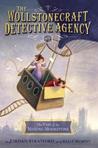
Book Review: "The Case of the Missing Moonstone" by Jordan Stratford

The Case of the Missing MoonstoneThe Case of the Missing Moonstone by Jordan Stratford
My rating: 2 of 5 stars

Rated G.

You cannot possibly be serious. There is only so much Deus Ex Machina that I can reasonably take, and The Case of the Missing Moonstone surpasses that boundary spectacularly. I kind of want to say that it is a problem when the most interesting part of a book is the Notes section at the back. I mean, it's a cute story, but I think the main value of the book is its historical value, which is admittedly dubious. Shall we explore the Sins?

Sin #1: Every historical fact/figure is obscured or changed until the book has no real value as a historical fiction book. Is the purpose to be historical? Well, no and yes. Based on the story and the dates alone, the answer is no, but according to the concluding Notes, the majority of the story's cast is composed of real historical characters such as Charles Dickens, Mary Wollstonecraft Godwin (later Shelley), Percy Bysshe Shelley, Augusta Ada Byron (later Lovecraft), George Gordon Byron, and more.

The problem is really that nearly all of the characters' dates are totally switched around. For instance, the two heroines are, for the purposes of the story, only three years apart, whereas in real life, they were eighteen years apart. One of the characters should have been dead years before. Some never met in real life. Some didn't survive childhood. SO MUCH is made up that it is kind of ridiculous, especially when the characters are actually based on real people.

In other words, here's my take on it: If you are going to make everything up, make up the names, too. Don't even bother connecting these characters to history, or, if you really want these particular characters, make it an obvious alternate history. Go ahead and base the eleven-year-old girl on Ada Byron, and go ahead and base the fourteen-year-old girl on Mary Godwin, but for goodness' sakes, if you are going to make time and people do whatever you want them to do, don't even bother connecting it so obviously to historical people and places. You can cite your sources and inspiration, but don't pretend that these characters are the same as the real people. THEY. ARE. NOT.

This doesn't always bother me, but when it is carried to such an extent and in conjunction with many other Book Sins, you'd better believe that I am no longer amused.

Sin #2: Oversimplification Okay, perhaps this can be chalked up to being an elementary/middle grade book about the 19th century. Nevertheless, this feels like a cheap knockoff of Nancy Springer's Enola Holmes. Enola Holmes has character, verve, spunk--whatever you want to call it. Oh, and her methods and struggles both are kind of more realistic, even when they are somewhat improbable. For those of you who want to say that at least Mary and Ada use science and math, Enola also solves puzzles, cracks codes (that readers can learn to use!), and uses various methods of deductions to crack the case.

***BONUS: Enola Homes is the fictional sister of a fictional character, THE Sherlock Holmes, so there can be a bit of historical fiction mixed in with the admittedly fictional characters! The problem with completely recreated history kind of goes out the window since the Holmesian world is an alternate version of Victorian England anyway, colliding a few times with reality (e.g. Florence Nightingale makes a few appearances, and the Crimean War is mentioned). She has genuine struggles with the villains, with society, and with her brothers, who want to send her to boarding school.***

Ada and Mary are totally different. Ada is a spoiled child who runs rampant over all of the servants. (Okay, that's realistic. Never mind that point.) Mary, though, plays at being rebellious but isn't really. She rides in a carriage unchaperoned every day, but that's pretty much it until she helps Ada create a detective agency. And everything just feels clean and pretty and just like the illustrations. No shadows. No crinkles. Perfect hair. Convenient happenings. Just look at the cover and you'll see what I mean. All of the illustrations match (they are in black and white and shades of beautifully shaded gray). If you don't mind stories with characters whose dresses don't have a single fold or crinkle and their lives are drawn out in colored pencil, you'd probably like this book.

Sin #3: Deus Ex Machina, Meet Deus Ex Machina Ready or not, here I come! This is what really threw me into a snarling fit of book-rage. (Well, not really, but pretty close.) THE CONVENIENCE OF EVERYTHING IS BEYOND BELIEF.

Take the opening chapter, for instance. In what universe is a young Lady (eleven years old at the beginning of the book, which means that she had to have been ten years old or younger when she first conceived the idea) ever gifted with the materials, manpower, and sheer know-how to make a functional hot-air balloon? I'll grant that it is possible for an child prodigy to have a mind like a steel trap that can conceive of this. But to actually create it? That requires significant cooperation from a LOT of consenting, intelligent, wealthy, and supportive adults. Recap: Ada somehow designed and created a functioning hot air balloon, even though she has only two supporting adults in her life, BOTH of them servants, and despite her extreme youth and inability to function outside of the home. And remember that this is 19th century England, and the young lady in question is the daughter of Baroness Wentworth (who admittedly neglects her daughter, but STILL). Nope. Nope. NOPE. I need significant explanation for that particular occurrence.

Then we have the whole prison incident. Two wealthy young girls are allowed to get into a prison unchaperoned and then are able to wheedle their way out of prison by claiming that they are impoverished orphans. By the way, they couldn't use that excuse to get into the prison because they have fancy dresses and hats on. And I don't think that an actual prison guard would (a) allow such girls into the prison without interrogating them as to their purpose AND with an adult's supervision BECAUSE THIS IS 19TH CENTURY ENGLAND AND THIS IS NEWGATE PRISON AND THESE ARE CLEARLY UNSUPERVISED WEALTHY CHILDREN or (b) refuse to let them out again after having let them in, clearly understanding that they are not, in fact, prisoners who need to be kept in in the first place.

And I absolutely CANNOT finish this review without mentioning that appalling ending. Beware. Spoilers abound.

Let's list the incidences of Deus Ex Machina, shall we?

1. These two paragraphs:

A huge chuff sent a shot of black smoke, up from the water as a round-bellied steamboat chugged to life. The two constables turned toward the distraction. [YOU HAVE TO BE JOKING. ARE THESE PROFESSIONALS OR NOT?! These people are on a DOCK. In LONDON. Steamboats HAPPEN!] Abernathy, still in irons, used the cuffs to strike the first constable in the head, knocking him down, and then sharply shouldered the second constable into the river with a resounding sploosh. [Reeeeeally? Also, how close are they to the water again, being [supposedly] thinking individuals on a dock?]

Peebs turned at the commotion to see the thief leap aboard the little chugging boat [even though he should be having some balancing issues due to the irons on his wrists], scramble to the wheel, and overpower the captain, tossing him overboard with the constable [The captain and two constables are wimps compared to a fishmonger!!!] . Mary and Ada watched, mouths agape, as Peebs ran to the deck's edge Why is an unencumbered young man unable to catch up to a fettered person trying to gain control of a totally unfamiliar boat that he probably doesn't know how to drive]. But Abernathy had gained control of the boat and was picking up speed. He was getting away! [Refer to my earlier skepticism as to his ability to master the controls of a boat while his wrists are tied together with irons]

2. The protagonists' ability to catch a cab by the dock and hightail it back to their mansion in time to get to the hot air balloon, launch it on its maiden voyage because it has been conveniently functional and, one assumes, full of hot air for an unspecified length of time...probably months, if not a year or more, and ride it back to the dock in time to catch the villain.

3. The hot air balloon itself (which is miraculously fully functional, despite the fact that an eleven-year-old girl designed and created it with an unspecified amount of responsible adult supervision, money, and labor).

4. Mary's unforeseen, unpredictable, and entirely unprecedented ability to think ahead of Ada and grasp the mechanics of a hot air balloon, despite the fact that she has people skills while Ada has mechanical/technical/mathematical skills. This is reinforced throughout the entire novel. You DO NOT get to make a girl a quick-thinking engineer after establishing her experience with literature and people above math and machines for about 250 pages.

5. That remarkably convenient southerly wind that steers the unsteerable hot air balloon (on its maiden voyage, no less) straight to their destination in very little time.

6. The fact that the hot air balloon (with minimum adjusting) manages to crash straight into the steamboat at which they are aiming, thus completely discombobulating the thief. Oh, and don't forget this paragraph:

The thief could not possibly have been prepared for being bashed in the head with a giant wicker basket inhabited by two remarkably clever and resourceful girls, so he wasn't. The gondola clocked him at a decent-enough speed so as to knock him out cold [WITHOUT killing him, you'll notice! This is a G/PG-rated book, after all!] before it crashed into the engine, tipping the girls over sideways and spilling them to the deck. [Again, no injuries, despite this convenient thief-catching hot air balloon crash into a steamboat.] Sparks and soot flew, and despite the rain, the balloon's tattered fabric soon was in flames.

Remember what I said about having a boundary of belief? I can endure pretty much all sins...up to a point. When a book crosses that line, I am totally okay with going on a full-on crazed book rant. And now that rant is over. Thank you. You've been a wonderful audience.

View all my reviews

Tuesday, April 14, 2015

Book Review: "The Syrian Virgin" by Zack Love

The Syrian Virgin (The Syrian Virgin, #1)The Syrian Virgin by Zack Love
My rating: 1 of 5 stars

Rated R for sensuality, sexuality, strong language, strong violence, and mature thematic material.

I was asked to read and review this book even though—actually, because—I don’t seem to be the intended audience (which seems to be romance fans). Nevertheless, I will give this my best shot.

My first question was why, precisely, this book seems to have appeal to romance fans. If, as has been suggested to me, the book is about the persecution of Syrian Christians, why would the main audience like books such as Fifty Shades of Grey and books with covers featuring lingerie-clad women? To answer this, I will analyze the superficial aspects of the book that may create strong first impressions in the readers.

To start, upon beginning this book, my eye was caught by a few things: the cover, the title, the author’s name, the Table of Contents, the Acknowledgment, and the Dedication. Who reads (and analyzes) these things? *Raising hand* Yes, that’s me. Prepare yourself.

I. (a) The Cover

I love the cover—sort of. Well, it is well designed. It is a close-up shot of a young woman’s face with a reflection of fire in her eye—which, incidentally, communicates her overall inability to act. She is clearly watching passively; there is no suggest of concern, fear, horror, shock, or anger in her face. She is like a blank canvas. We also see the corner of her headwrap and, behind the title, there is a shot of a brightly lit American bridge at night. Which bridge? Beats me. The combination of these images points out the obvious culture clash and presents the question of the heroine’s unexplained naïveté, given that fire (which we presume is literal fire but could just as easily be the figurative fire of passion). The nighttime setting of the bridge also carries with it some sensual undertones.

The main issues are (a) the color scheme, (b) the title, and (c) the author’s name. First, the color scheme is red, black, and white, which, in my personal experience, tends to suggest dark and potentially steamy romances or affairs or such. Examples include Twilight, The Heist Society, Sunshine, The Sea of Tranquility, Looking for Alaska, The White Cat, Beastly and Thirteen Reasons Why. Alternatively, the color scheme may suggest lots of violence—often along with the romance, as in the books I mentioned above.

Second, the title is The Syrian Virgin. What is the operative word here? You guessed it: Virgin. Syrian only adds additional illicitness to the title. You know—“Ooh, Middle Eastern affairs? Hidden beauty and forbidden love? Getting past the veil to that sultry-ness? Edgy!!!”

Third, the author’s name is Zack Love, and his last name is put in obvious proximity to the word Virgin. I have nothing against his name, but the cover designer really could have put extra effort into separating those two words were this not a steamy romance novel.

So there you have it. In my opinion, the color scheme, the prominent words in the title, and the placement of the author’s admittedly evocative last name contribute, along with the cover images, to the romantic appeal of the book. There really is no other obvious potential audience for this book based on the cover.

I. (b) The Table of Contents, the Acknowledgment, and the Dedication

First of all, the chapter titles alternate between Anissa and Julien. This implies that this is a romance story that starts at chapter 13 (how portentous). There is no foreshadowing whatsoever about the actual contents of the book other than that admittedly superficial information.

Second, the first words of the acknowledgment are “Publishing this book just two months after the story first came to me . . . .” Okay. So all I know about the book by the time I have looked at the cover, the table of contents, and the acknowledgement are that there is a heavy focus on romance and this was a hastily written book. So far, I have serious doubts about the lasting value of the story.

The Dedication, though, is the first real hint about the importance of the book’s content: To the people of Syria. The world let you down. This is the first thing that hooked me, an admitted reader of YA and children’s [clean] fantasy and realistic fiction. 10/10 points for a winning dedication.

II. Quick Summary

Anissa is a young Christian woman who fled from Syria at the age of fourteen when her parents and brother were murdered by jihadists. As a seventeen-year-old college student narrating to her diary the events of her life, both past and present, Anissa remains deeply haunted by the events of her childhood. As she struggles to literally make the grade in her courses, she searches for a way to work for her fellow Syrian Christians who are still being viciously persecuted. At the same time, she is searching for love and must decide between two very good prospects.

III. And Now…The Content!

The hook is okay. Italicized flashback—perhaps a tad clichéd, but good. Sentimentality abounds, though.

I do have some questions. First of all, after having suffered through so much, would Anissa really go Facebook/Twitter stalking for this guy she has a crush on? She retweets, she shares, she posts, and she is basically the ultimate social media activist. Plus, where is she getting all of her money? She is seeing a therapist regularly and taking undoubtedly expensive martial arts classes for years, but she doesn’t have a job. She seems to have effortlessly assimilated into the American college culture, despite the frequent mentions of her difficulties with the hyper-sexualization of our culture. There are just a lot of character inconsistencies.

In addition, she is a beautiful genius haunted by her past, going to a prestigious school, while crushing on a dark, smolderingly handsome polyglot genius with a similar backstory who is also getting his Ph.D. while managing an activist group, working “as a freelance journalist,” owning a PR company, training in martial arts, and playing music. She is also being lusted after for her beauty and unavailability and virginity and all that by her 41-year-old genius and “ultimate bachelor” college professor who is also a billionaire genius with a troubled past and an addiction to 20-something girls (maybe younger). I’m sensing a pattern here. There is only so much of this that I can realistically take, and I am not convinced that this is in any way based in reality. If it is, I mourn for our culture’s understanding of reality. The entire book, in fact, feels like a Harlequin novel that is playing on the current hot topics. Of course, I will readily admit that I have never read a Harlequin novel—but if this is anything like them, I plan on keeping it that way. I agree that the persecution of the Syrian Christians is abominable and needs to be addressed and abolished now—preferably years ago!—but this book is much shallower than it pretends to be.

I also have two more questions. If Anissa grew up in a devout Christian home in Syria, where to be Christian is to have to be committed to the point of death, how/why did she (a) not know anything about the evolutionary model before entering the States, especially in a relatively well-off family that gave her lots of schooling (remember that her sister was going to a music college, the family had a maid, and they also had enough savings to smuggle Anissa into the U.S. illegally via Canada and provide a good amount of funds to start her off), and (b) why did she automatically and unquestioningly accept it as soon as she entered the U.S. school system, even though it directly contrasts with a literal translation of the Biblical Creation?

Also, I’m having a hard time believing that her mother would have sent Anissa off with the explicit instructions to retain her virginity for the right guy without emphasizing the importance of that same person’s religion. It’s just that there are enough passages in the Bible emphasizing the importance of unity of faith within a marriage that I am not thoroughly convinced that Anissa’s mother—or even Anissa—doesn’t think of that aspect at all. Besides, in Christian doctrine, marriage is a human-sized picture of our relationship with God, whereas there is nothing about that in The Sÿrian Virgin. Personally, I think that in that situation a Christian American would be better than a Syrian atheist or an American gnostic, but maybe I am wrong. Just some thoughts.

Ack. This has been a really disorganized section. Let’s just move on, shall we? I’m not going to finish the book anyway.

IV. Overview of Book’s Overall Value

Well, I gave this book my best shot. I did. I got 68% of the way through it—and it is my first Kindle book. I just couldn’t take it anymore. About the time that Anissa was getting all sexual and Julien was seriously considering accosting her, I just couldn’t take finishing the book. It is an R-rated book in almost every way. Plus, Zack Love has an amateurish writing style with a lot of Tell-Don’t-Show with things that really matter and a lot of Show-Don’t-Tell for all of the R-rated sexual sections. I…I just can’t. Really. I can’t finish this. The book’s contents fulfill all of promises of the cover, the table of contents, and the acknowledgment. It’s relatively well-researched, but the characters are flat and unrealistic with little genuine character development and impact on me as a reader, and I was never hooked into the plot.

In addition, Zack Love seems to be genuinely struggling with the Syrian conflict, which is basically taking a backseat to the love triangle. To be fair, he tries so hard to raise awareness of the issues that the media is deliberately ignoring, but in an ironic twist, the Syrian holocaust keeps taking second place to the truly icky romances going on. The Syrian virgin seems to be heading toward being torn between her 41-year-old billionaire adulterous psychology professor and the equally intelligent and egotistical boyfriend, who has also had multiple affairs. Neither one of them is Christian, whereas I would suspect that a girl of Anissa’s background would be specifically looking for someone who shares her religious beliefs. Actually, I can’t believe that her faithful and loving mother would not have specified the importance of looking for and marrying a Christian. For a book about a Syrian Christian and her purity, there is a marked lack of actual Christian values being held.

I guess that I did not find myself really enlightened by reading this book, and I was more disgusted than anything by the increasingly explicit sexuality. I quit when that started getting pretty strong, but even though I am truly concerned about the events in the Middle East and think that more needs to be done to work for our brothers and sisters in Christ, this book does not meet these needs but rather seems like it compounds them by placing a high emphasis on the love triangle and Anissa’s need to lose her virginity or some such balderdash.

View all my reviews

Monday, April 13, 2015

Finishing Up Learning 2.0 . . . ?

This is probably going to be the last post in my Learning 2.0 series...or will it? You decide!

This class assignment has pushed me beyond my comfort zone again and again, forcing me to experiment with technologies, including Flickr, wikis, Goodreads, Skype, image generators, widgets, personalized search engines, Diigo, blogs, Twitter, YouTube, podcasts, Wordle, and Google Forms. Some of them were already familiar to me while some were completely new. For instance, I already used Goodreads, blogs, and YouTube and loved them. The others, though, were new or oft-avoided, and I had varying reactions. (You can read more about that at the end of this post.)

Whether I loved or hated a technology, though, I have to admit I learned tons and tons about how our world works, and I tried to take each opportunity and really embrace it for all it was worth. Sometimes that resulted in long rants, I will admit, but even in the midst of my rants, I found myself enjoying the experiences and opportunities to analyze and work with new things. Oddly enough, one of my favorite posts was about a technology I basically rejected on principle (although I do look at it occasionally)--my post about Twitter (#8 on the list below).

What have I learned in the past four months? Well, in short, I have learned more about how to learn. And that's the point of this whole series of assignments. To expand on that, I didn't have to love each technology. I just had to learn about them and explore the opportunities and offerings of the World Wide Web. I was free to embrace, discard, or think about each technology further--but I learned about a number of programs, I learned how to use them, and then I sometimes took it a step further to explore how these technologies compare to past norms or other mediums. I've also learned that learning itself doesn't--and shouldn't stop.

I'm graduating this year with my Bachelor's degree, and the more I think about this stage in my life, the more I realize that the diploma is not the goal itself. What is infinitely more valuable is the learning along the way. We call the graduation ceremony "Commencement," but that's a lie. "Commencement" means "beginning," and the so-called "Commencement" that celebrates graduation obscures the fact that we have been living and learning all along. The name makes us think that we are just now starting our lives, and while that idea may be momentarily freeing, it is also immensely frustrating because it makes us think that the last ___ years of our lives have been a waste. For me, if I had to think of Commencement as a beginning, I would be angry because I have probably wasted a full third of my lifetime.

NOT SO.

No one can convince me that my life has been nonexistent for the past four years of college--or, goodness, the last seventeen years of education! On the contrary, sometimes I have felt most alive when in the midst of learning. It's when I'm not learning that I feel stagnant. But that also makes me realize, though, that if I love to learn, graduation doesn't force me to stop--it just forces me to look for new learning opportunities, whether through graduate school or *GASP* the real world! And that is what Learning 2.0 is really all about. And that is also why Learning 2.0 should never end, because even though it's about the technology, it really isn't all about the technology. That's why "Learning" is the prevailing noun and "2.0" is the extra tidbit slapped on there to make learning seem more hip and modern.


P.S. If you haven't read any/all of the posts in this series but really, really, really want to, you can access them here:
  1. Learning 2.0.1: The 7.5 Steps to Getting Your Life Together and Becoming a Good Lifelong Learner!
  2. Beauty and the Beast: A Librarian's Fantasy
  3. Creating Classroom Collaborations Via Wikis
  4. Some Things I Have Been Reading Recently
  5. Skypetastic-less
  6. Why Go Diigo?
  7. Blogs, Blogs, and More Blogs!
  8. G.K. Chesterton, Twitter, and the Lost Art of the Story
  9. YouTube and Booktalks
  10. Podcasts and the Art of Marketing with Sensory Appeal
  11. The Wordle World of Words
  12. Blog Survey! Please Fill This Out!