Aaaaand...Learning 2.0 resumes! Are you a school library media specialist or just like books and want to present a book-related message in a fun way? Consider using PowerPoint, combined with cool Animations and book covers, to tell a story. You Never Can Tell how exciting it can be to portray your message through book titles!
Thursday, April 30, 2015

Wednesday, April 22, 2015
Book Review: "The Case of the Missing Moonstone" by Jordan Stratford
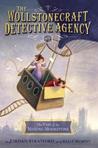 The Case of the Missing Moonstone by Jordan Stratford
My rating: 2 of 5 stars
Rated G.
You cannot possibly be serious. There is only so much Deus Ex Machina that I can reasonably take, and The Case of the Missing Moonstone surpasses that boundary spectacularly. I kind of want to say that it is a problem when the most interesting part of a book is the Notes section at the back. I mean, it's a cute story, but I think the main value of the book is its historical value, which is admittedly dubious. Shall we explore the Sins?
Sin #1: Every historical fact/figure is obscured or changed until the book has no real value as a historical fiction book. Is the purpose to be historical? Well, no and yes. Based on the story and the dates alone, the answer is no, but according to the concluding Notes, the majority of the story's cast is composed of real historical characters such as Charles Dickens, Mary Wollstonecraft Godwin (later Shelley), Percy Bysshe Shelley, Augusta Ada Byron (later Lovecraft), George Gordon Byron, and more.
The problem is really that nearly all of the characters' dates are totally switched around. For instance, the two heroines are, for the purposes of the story, only three years apart, whereas in real life, they were eighteen years apart. One of the characters should have been dead years before. Some never met in real life. Some didn't survive childhood. SO MUCH is made up that it is kind of ridiculous, especially when the characters are actually based on real people.
In other words, here's my take on it: If you are going to make everything up, make up the names, too. Don't even bother connecting these characters to history, or, if you really want these particular characters, make it an obvious alternate history. Go ahead and base the eleven-year-old girl on Ada Byron, and go ahead and base the fourteen-year-old girl on Mary Godwin, but for goodness' sakes, if you are going to make time and people do whatever you want them to do, don't even bother connecting it so obviously to historical people and places. You can cite your sources and inspiration, but don't pretend that these characters are the same as the real people. THEY. ARE. NOT.
This doesn't always bother me, but when it is carried to such an extent and in conjunction with many other Book Sins, you'd better believe that I am no longer amused.
Sin #2: Oversimplification Okay, perhaps this can be chalked up to being an elementary/middle grade book about the 19th century. Nevertheless, this feels like a cheap knockoff of Nancy Springer's Enola Holmes. Enola Holmes has character, verve, spunk--whatever you want to call it. Oh, and her methods and struggles both are kind of more realistic, even when they are somewhat improbable. For those of you who want to say that at least Mary and Ada use science and math, Enola also solves puzzles, cracks codes (that readers can learn to use!), and uses various methods of deductions to crack the case.
***BONUS: Enola Homes is the fictional sister of a fictional character, THE Sherlock Holmes, so there can be a bit of historical fiction mixed in with the admittedly fictional characters! The problem with completely recreated history kind of goes out the window since the Holmesian world is an alternate version of Victorian England anyway, colliding a few times with reality (e.g. Florence Nightingale makes a few appearances, and the Crimean War is mentioned). She has genuine struggles with the villains, with society, and with her brothers, who want to send her to boarding school.***
Ada and Mary are totally different. Ada is a spoiled child who runs rampant over all of the servants. (Okay, that's realistic. Never mind that point.) Mary, though, plays at being rebellious but isn't really. She rides in a carriage unchaperoned every day, but that's pretty much it until she helps Ada create a detective agency. And everything just feels clean and pretty and just like the illustrations. No shadows. No crinkles. Perfect hair. Convenient happenings. Just look at the cover and you'll see what I mean. All of the illustrations match (they are in black and white and shades of beautifully shaded gray). If you don't mind stories with characters whose dresses don't have a single fold or crinkle and their lives are drawn out in colored pencil, you'd probably like this book.
Sin #3: Deus Ex Machina, Meet Deus Ex Machina Ready or not, here I come! This is what really threw me into a snarling fit of book-rage. (Well, not really, but pretty close.) THE CONVENIENCE OF EVERYTHING IS BEYOND BELIEF.
Take the opening chapter, for instance. In what universe is a young Lady (eleven years old at the beginning of the book, which means that she had to have been ten years old or younger when she first conceived the idea) ever gifted with the materials, manpower, and sheer know-how to make a functional hot-air balloon? I'll grant that it is possible for an child prodigy to have a mind like a steel trap that can conceive of this. But to actually create it? That requires significant cooperation from a LOT of consenting, intelligent, wealthy, and supportive adults. Recap: Ada somehow designed and created a functioning hot air balloon, even though she has only two supporting adults in her life, BOTH of them servants, and despite her extreme youth and inability to function outside of the home. And remember that this is 19th century England, and the young lady in question is the daughter of Baroness Wentworth (who admittedly neglects her daughter, but STILL). Nope. Nope. NOPE. I need significant explanation for that particular occurrence.
Then we have the whole prison incident. Two wealthy young girls are allowed to get into a prison unchaperoned and then are able to wheedle their way out of prison by claiming that they are impoverished orphans. By the way, they couldn't use that excuse to get into the prison because they have fancy dresses and hats on. And I don't think that an actual prison guard would (a) allow such girls into the prison without interrogating them as to their purpose AND with an adult's supervision BECAUSE THIS IS 19TH CENTURY ENGLAND AND THIS IS NEWGATE PRISON AND THESE ARE CLEARLY UNSUPERVISED WEALTHY CHILDREN or (b) refuse to let them out again after having let them in, clearly understanding that they are not, in fact, prisoners who need to be kept in in the first place.
And I absolutely CANNOT finish this review without mentioning that appalling ending. Beware. Spoilers abound.
Let's list the incidences of Deus Ex Machina, shall we?
1. These two paragraphs:
A huge chuff sent a shot of black smoke, up from the water as a round-bellied steamboat chugged to life. The two constables turned toward the distraction. [YOU HAVE TO BE JOKING. ARE THESE PROFESSIONALS OR NOT?! These people are on a DOCK. In LONDON. Steamboats HAPPEN!] Abernathy, still in irons, used the cuffs to strike the first constable in the head, knocking him down, and then sharply shouldered the second constable into the river with a resounding sploosh. [Reeeeeally? Also, how close are they to the water again, being [supposedly] thinking individuals on a dock?]
Peebs turned at the commotion to see the thief leap aboard the little chugging boat [even though he should be having some balancing issues due to the irons on his wrists], scramble to the wheel, and overpower the captain, tossing him overboard with the constable [The captain and two constables are wimps compared to a fishmonger!!!] . Mary and Ada watched, mouths agape, as Peebs ran to the deck's edge Why is an unencumbered young man unable to catch up to a fettered person trying to gain control of a totally unfamiliar boat that he probably doesn't know how to drive]. But Abernathy had gained control of the boat and was picking up speed. He was getting away! [Refer to my earlier skepticism as to his ability to master the controls of a boat while his wrists are tied together with irons]
2. The protagonists' ability to catch a cab by the dock and hightail it back to their mansion in time to get to the hot air balloon, launch it on its maiden voyage because it has been conveniently functional and, one assumes, full of hot air for an unspecified length of time...probably months, if not a year or more, and ride it back to the dock in time to catch the villain.
3. The hot air balloon itself (which is miraculously fully functional, despite the fact that an eleven-year-old girl designed and created it with an unspecified amount of responsible adult supervision, money, and labor).
4. Mary's unforeseen, unpredictable, and entirely unprecedented ability to think ahead of Ada and grasp the mechanics of a hot air balloon, despite the fact that she has people skills while Ada has mechanical/technical/mathematical skills. This is reinforced throughout the entire novel. You DO NOT get to make a girl a quick-thinking engineer after establishing her experience with literature and people above math and machines for about 250 pages.
5. That remarkably convenient southerly wind that steers the unsteerable hot air balloon (on its maiden voyage, no less) straight to their destination in very little time.
6. The fact that the hot air balloon (with minimum adjusting) manages to crash straight into the steamboat at which they are aiming, thus completely discombobulating the thief. Oh, and don't forget this paragraph:
The thief could not possibly have been prepared for being bashed in the head with a giant wicker basket inhabited by two remarkably clever and resourceful girls, so he wasn't. The gondola clocked him at a decent-enough speed so as to knock him out cold [WITHOUT killing him, you'll notice! This is a G/PG-rated book, after all!] before it crashed into the engine, tipping the girls over sideways and spilling them to the deck. [Again, no injuries, despite this convenient thief-catching hot air balloon crash into a steamboat.] Sparks and soot flew, and despite the rain, the balloon's tattered fabric soon was in flames.
Remember what I said about having a boundary of belief? I can endure pretty much all sins...up to a point. When a book crosses that line, I am totally okay with going on a full-on crazed book rant. And now that rant is over. Thank you. You've been a wonderful audience.
View all my reviews
Tuesday, April 14, 2015
Book Review: "The Syrian Virgin" by Zack Love
 The Syrian Virgin by Zack Love
My rating: 1 of 5 stars
Rated R for sensuality, sexuality, strong language, strong violence, and mature thematic material.
I was asked to read and review this book even though—actually, because—I don’t seem to be the intended audience (which seems to be romance fans). Nevertheless, I will give this my best shot.
My first question was why, precisely, this book seems to have appeal to romance fans. If, as has been suggested to me, the book is about the persecution of Syrian Christians, why would the main audience like books such as Fifty Shades of Grey and books with covers featuring lingerie-clad women? To answer this, I will analyze the superficial aspects of the book that may create strong first impressions in the readers.
To start, upon beginning this book, my eye was caught by a few things: the cover, the title, the author’s name, the Table of Contents, the Acknowledgment, and the Dedication. Who reads (and analyzes) these things? *Raising hand* Yes, that’s me. Prepare yourself.
I. (a) The Cover
I love the cover—sort of. Well, it is well designed. It is a close-up shot of a young woman’s face with a reflection of fire in her eye—which, incidentally, communicates her overall inability to act. She is clearly watching passively; there is no suggest of concern, fear, horror, shock, or anger in her face. She is like a blank canvas. We also see the corner of her headwrap and, behind the title, there is a shot of a brightly lit American bridge at night. Which bridge? Beats me. The combination of these images points out the obvious culture clash and presents the question of the heroine’s unexplained naïveté, given that fire (which we presume is literal fire but could just as easily be the figurative fire of passion). The nighttime setting of the bridge also carries with it some sensual undertones.
The main issues are (a) the color scheme, (b) the title, and (c) the author’s name. First, the color scheme is red, black, and white, which, in my personal experience, tends to suggest dark and potentially steamy romances or affairs or such. Examples include Twilight, The Heist Society, Sunshine, The Sea of Tranquility, Looking for Alaska, The White Cat, Beastly and Thirteen Reasons Why. Alternatively, the color scheme may suggest lots of violence—often along with the romance, as in the books I mentioned above.
Second, the title is The Syrian Virgin. What is the operative word here? You guessed it: Virgin. Syrian only adds additional illicitness to the title. You know—“Ooh, Middle Eastern affairs? Hidden beauty and forbidden love? Getting past the veil to that sultry-ness? Edgy!!!”
Third, the author’s name is Zack Love, and his last name is put in obvious proximity to the word Virgin. I have nothing against his name, but the cover designer really could have put extra effort into separating those two words were this not a steamy romance novel.
So there you have it. In my opinion, the color scheme, the prominent words in the title, and the placement of the author’s admittedly evocative last name contribute, along with the cover images, to the romantic appeal of the book. There really is no other obvious potential audience for this book based on the cover.
I. (b) The Table of Contents, the Acknowledgment, and the Dedication
First of all, the chapter titles alternate between Anissa and Julien. This implies that this is a romance story that starts at chapter 13 (how portentous). There is no foreshadowing whatsoever about the actual contents of the book other than that admittedly superficial information.
Second, the first words of the acknowledgment are “Publishing this book just two months after the story first came to me . . . .” Okay. So all I know about the book by the time I have looked at the cover, the table of contents, and the acknowledgement are that there is a heavy focus on romance and this was a hastily written book. So far, I have serious doubts about the lasting value of the story.
The Dedication, though, is the first real hint about the importance of the book’s content: To the people of Syria. The world let you down. This is the first thing that hooked me, an admitted reader of YA and children’s [clean] fantasy and realistic fiction. 10/10 points for a winning dedication.
II. Quick Summary
Anissa is a young Christian woman who fled from Syria at the age of fourteen when her parents and brother were murdered by jihadists. As a seventeen-year-old college student narrating to her diary the events of her life, both past and present, Anissa remains deeply haunted by the events of her childhood. As she struggles to literally make the grade in her courses, she searches for a way to work for her fellow Syrian Christians who are still being viciously persecuted. At the same time, she is searching for love and must decide between two very good prospects.
III. And Now…The Content!
The hook is okay. Italicized flashback—perhaps a tad clichéd, but good. Sentimentality abounds, though.
I do have some questions. First of all, after having suffered through so much, would Anissa really go Facebook/Twitter stalking for this guy she has a crush on? She retweets, she shares, she posts, and she is basically the ultimate social media activist. Plus, where is she getting all of her money? She is seeing a therapist regularly and taking undoubtedly expensive martial arts classes for years, but she doesn’t have a job. She seems to have effortlessly assimilated into the American college culture, despite the frequent mentions of her difficulties with the hyper-sexualization of our culture. There are just a lot of character inconsistencies.
In addition, she is a beautiful genius haunted by her past, going to a prestigious school, while crushing on a dark, smolderingly handsome polyglot genius with a similar backstory who is also getting his Ph.D. while managing an activist group, working “as a freelance journalist,” owning a PR company, training in martial arts, and playing music. She is also being lusted after for her beauty and unavailability and virginity and all that by her 41-year-old genius and “ultimate bachelor” college professor who is also a billionaire genius with a troubled past and an addiction to 20-something girls (maybe younger). I’m sensing a pattern here. There is only so much of this that I can realistically take, and I am not convinced that this is in any way based in reality. If it is, I mourn for our culture’s understanding of reality. The entire book, in fact, feels like a Harlequin novel that is playing on the current hot topics. Of course, I will readily admit that I have never read a Harlequin novel—but if this is anything like them, I plan on keeping it that way. I agree that the persecution of the Syrian Christians is abominable and needs to be addressed and abolished now—preferably years ago!—but this book is much shallower than it pretends to be.
I also have two more questions. If Anissa grew up in a devout Christian home in Syria, where to be Christian is to have to be committed to the point of death, how/why did she (a) not know anything about the evolutionary model before entering the States, especially in a relatively well-off family that gave her lots of schooling (remember that her sister was going to a music college, the family had a maid, and they also had enough savings to smuggle Anissa into the U.S. illegally via Canada and provide a good amount of funds to start her off), and (b) why did she automatically and unquestioningly accept it as soon as she entered the U.S. school system, even though it directly contrasts with a literal translation of the Biblical Creation?
Also, I’m having a hard time believing that her mother would have sent Anissa off with the explicit instructions to retain her virginity for the right guy without emphasizing the importance of that same person’s religion. It’s just that there are enough passages in the Bible emphasizing the importance of unity of faith within a marriage that I am not thoroughly convinced that Anissa’s mother—or even Anissa—doesn’t think of that aspect at all. Besides, in Christian doctrine, marriage is a human-sized picture of our relationship with God, whereas there is nothing about that in The Sÿrian Virgin. Personally, I think that in that situation a Christian American would be better than a Syrian atheist or an American gnostic, but maybe I am wrong. Just some thoughts.
Ack. This has been a really disorganized section. Let’s just move on, shall we? I’m not going to finish the book anyway.
IV. Overview of Book’s Overall Value
Well, I gave this book my best shot. I did. I got 68% of the way through it—and it is my first Kindle book. I just couldn’t take it anymore. About the time that Anissa was getting all sexual and Julien was seriously considering accosting her, I just couldn’t take finishing the book. It is an R-rated book in almost every way. Plus, Zack Love has an amateurish writing style with a lot of Tell-Don’t-Show with things that really matter and a lot of Show-Don’t-Tell for all of the R-rated sexual sections. I…I just can’t. Really. I can’t finish this. The book’s contents fulfill all of promises of the cover, the table of contents, and the acknowledgment. It’s relatively well-researched, but the characters are flat and unrealistic with little genuine character development and impact on me as a reader, and I was never hooked into the plot.
In addition, Zack Love seems to be genuinely struggling with the Syrian conflict, which is basically taking a backseat to the love triangle. To be fair, he tries so hard to raise awareness of the issues that the media is deliberately ignoring, but in an ironic twist, the Syrian holocaust keeps taking second place to the truly icky romances going on. The Syrian virgin seems to be heading toward being torn between her 41-year-old billionaire adulterous psychology professor and the equally intelligent and egotistical boyfriend, who has also had multiple affairs. Neither one of them is Christian, whereas I would suspect that a girl of Anissa’s background would be specifically looking for someone who shares her religious beliefs. Actually, I can’t believe that her faithful and loving mother would not have specified the importance of looking for and marrying a Christian. For a book about a Syrian Christian and her purity, there is a marked lack of actual Christian values being held.
I guess that I did not find myself really enlightened by reading this book, and I was more disgusted than anything by the increasingly explicit sexuality. I quit when that started getting pretty strong, but even though I am truly concerned about the events in the Middle East and think that more needs to be done to work for our brothers and sisters in Christ, this book does not meet these needs but rather seems like it compounds them by placing a high emphasis on the love triangle and Anissa’s need to lose her virginity or some such balderdash.
View all my reviews
Monday, April 13, 2015
Finishing Up Learning 2.0 . . . ?
This is probably going to be the last post in my Learning 2.0 series...or will it? You decide!
This class assignment has pushed me beyond my comfort zone again and again, forcing me to experiment with technologies, including Flickr, wikis, Goodreads, Skype, image generators, widgets, personalized search engines, Diigo, blogs, Twitter, YouTube, podcasts, Wordle, and Google Forms. Some of them were already familiar to me while some were completely new. For instance, I already used Goodreads, blogs, and YouTube and loved them. The others, though, were new or oft-avoided, and I had varying reactions. (You can read more about that at the end of this post.)
Whether I loved or hated a technology, though, I have to admit I learned tons and tons about how our world works, and I tried to take each opportunity and really embrace it for all it was worth. Sometimes that resulted in long rants, I will admit, but even in the midst of my rants, I found myself enjoying the experiences and opportunities to analyze and work with new things. Oddly enough, one of my favorite posts was about a technology I basically rejected on principle (although I do look at it occasionally)--my post about Twitter (#8 on the list below).
What have I learned in the past four months? Well, in short, I have learned more about how to learn. And that's the point of this whole series of assignments. To expand on that, I didn't have to love each technology. I just had to learn about them and explore the opportunities and offerings of the World Wide Web. I was free to embrace, discard, or think about each technology further--but I learned about a number of programs, I learned how to use them, and then I sometimes took it a step further to explore how these technologies compare to past norms or other mediums. I've also learned that learning itself doesn't--and shouldn't stop.
I'm graduating this year with my Bachelor's degree, and the more I think about this stage in my life, the more I realize that the diploma is not the goal itself. What is infinitely more valuable is the learning along the way. We call the graduation ceremony "Commencement," but that's a lie. "Commencement" means "beginning," and the so-called "Commencement" that celebrates graduation obscures the fact that we have been living and learning all along. The name makes us think that we are just now starting our lives, and while that idea may be momentarily freeing, it is also immensely frustrating because it makes us think that the last ___ years of our lives have been a waste. For me, if I had to think of Commencement as a beginning, I would be angry because I have probably wasted a full third of my lifetime.
NOT SO.
No one can convince me that my life has been nonexistent for the past four years of college--or, goodness, the last seventeen years of education! On the contrary, sometimes I have felt most alive when in the midst of learning. It's when I'm not learning that I feel stagnant. But that also makes me realize, though, that if I love to learn, graduation doesn't force me to stop--it just forces me to look for new learning opportunities, whether through graduate school or *GASP* the real world! And that is what Learning 2.0 is really all about. And that is also why Learning 2.0 should never end, because even though it's about the technology, it really isn't all about the technology. That's why "Learning" is the prevailing noun and "2.0" is the extra tidbit slapped on there to make learning seem more hip and modern.

P.S. If you haven't read any/all of the posts in this series but really, really, really want to, you can access them here:
This class assignment has pushed me beyond my comfort zone again and again, forcing me to experiment with technologies, including Flickr, wikis, Goodreads, Skype, image generators, widgets, personalized search engines, Diigo, blogs, Twitter, YouTube, podcasts, Wordle, and Google Forms. Some of them were already familiar to me while some were completely new. For instance, I already used Goodreads, blogs, and YouTube and loved them. The others, though, were new or oft-avoided, and I had varying reactions. (You can read more about that at the end of this post.)
Whether I loved or hated a technology, though, I have to admit I learned tons and tons about how our world works, and I tried to take each opportunity and really embrace it for all it was worth. Sometimes that resulted in long rants, I will admit, but even in the midst of my rants, I found myself enjoying the experiences and opportunities to analyze and work with new things. Oddly enough, one of my favorite posts was about a technology I basically rejected on principle (although I do look at it occasionally)--my post about Twitter (#8 on the list below).
What have I learned in the past four months? Well, in short, I have learned more about how to learn. And that's the point of this whole series of assignments. To expand on that, I didn't have to love each technology. I just had to learn about them and explore the opportunities and offerings of the World Wide Web. I was free to embrace, discard, or think about each technology further--but I learned about a number of programs, I learned how to use them, and then I sometimes took it a step further to explore how these technologies compare to past norms or other mediums. I've also learned that learning itself doesn't--and shouldn't stop.
I'm graduating this year with my Bachelor's degree, and the more I think about this stage in my life, the more I realize that the diploma is not the goal itself. What is infinitely more valuable is the learning along the way. We call the graduation ceremony "Commencement," but that's a lie. "Commencement" means "beginning," and the so-called "Commencement" that celebrates graduation obscures the fact that we have been living and learning all along. The name makes us think that we are just now starting our lives, and while that idea may be momentarily freeing, it is also immensely frustrating because it makes us think that the last ___ years of our lives have been a waste. For me, if I had to think of Commencement as a beginning, I would be angry because I have probably wasted a full third of my lifetime.
NOT SO.
No one can convince me that my life has been nonexistent for the past four years of college--or, goodness, the last seventeen years of education! On the contrary, sometimes I have felt most alive when in the midst of learning. It's when I'm not learning that I feel stagnant. But that also makes me realize, though, that if I love to learn, graduation doesn't force me to stop--it just forces me to look for new learning opportunities, whether through graduate school or *GASP* the real world! And that is what Learning 2.0 is really all about. And that is also why Learning 2.0 should never end, because even though it's about the technology, it really isn't all about the technology. That's why "Learning" is the prevailing noun and "2.0" is the extra tidbit slapped on there to make learning seem more hip and modern.
P.S. If you haven't read any/all of the posts in this series but really, really, really want to, you can access them here:
- Learning 2.0.1: The 7.5 Steps to Getting Your Life Together and Becoming a Good Lifelong Learner!
- Beauty and the Beast: A Librarian's Fantasy
- Creating Classroom Collaborations Via Wikis
- Some Things I Have Been Reading Recently
- Skypetastic-less
- Why Go Diigo?
- Blogs, Blogs, and More Blogs!
- G.K. Chesterton, Twitter, and the Lost Art of the Story
- YouTube and Booktalks
- Podcasts and the Art of Marketing with Sensory Appeal
- The Wordle World of Words
- Blog Survey! Please Fill This Out!
Friday, April 10, 2015
Book Review: "A Monster Calls" by Patrick Ness
 A Monster Calls by Patrick Ness
My rating: 5 of 5 stars
Rated PG-13 for mature thematic elements and just...just gut-wrenching shock and horror and awe. SO WORTH IT.
Rarely have I been more impressed by a book. Being an incurable cover-judger, I was initially skeptical (the colors are, after all, quite close to the ever-dreaded red/black/white color scheme that is the hallmark of many books I loathe). However, I am absolutely delighted to have been proven wrong in this case. Then again, the colors describe the book perfectly. It is gut-wrenching, terrifying, contemplative, sad, and reactionary.
You know what it's like? It is like Patrick Ness took the pure and unadulterated essences of pain and fear and grief and guilt and put them into words and stark pictures. Everything is shown, not told. That's what makes this book so powerful. It's beautiful and powerful and difficult and impossible and healing--all at the same time. I will say it again: It is like Patrick Ness took the pure essence of emotion and reaction and condensed them into this short book.
I highly recommend this. If you or someone you know is struggling with just about anything, you need this in your life--and it is a quick read, too; it's not a 500-page monster (as much as I love those most of the time).
Read it. You'll be glad you did, even when you are curled up sobbing or in shock at the end.
View all my reviews
Wednesday, April 1, 2015
A World of Mirrors: Part II
The
Mirror-Dominated World of Snow White
Read A World of Mirrors: Part I here.
In my last mirror blog, I began a discussion about mirrors and reflections by discussing their presence and significance in Veronica Roth’s Divergent. To recap, the main symbolism of mirrors in the dystopian series seems to be that too much focus on ourselves, either on our external appearance or even on our character, excludes others and profoundly affects our relationships with others as well as the way that we see ourselves. However, mirrors were primarily important in the Divergent world because they were a background symbol—that is, their general absence was deeply symbolic.
In my last mirror blog, I began a discussion about mirrors and reflections by discussing their presence and significance in Veronica Roth’s Divergent. To recap, the main symbolism of mirrors in the dystopian series seems to be that too much focus on ourselves, either on our external appearance or even on our character, excludes others and profoundly affects our relationships with others as well as the way that we see ourselves. However, mirrors were primarily important in the Divergent world because they were a background symbol—that is, their general absence was deeply symbolic.
What happens, though, when a world and its characters are
essentially ruled by the dictates of a mirror? I would like to explore this by
traveling back in time several centuries to the world of Snow White and the
Seven Dwarfs. If you need a quick refresher on the non-Disney version, you can
read the Wikipedia
version, the Grimmstories version,
the Classiclit version, or my humorous version to get
caught up.
So now
that you have reviewed some of the non-Disneyfied elements of the original Snow
White story, let’s look at a few of the key elements. To start, the three main figures of the story (in order of appearance) are Snow White, the evil
Queen, and the mirror. I would like to reverse this order, though—reflect it,
if you will—to analyze the symbolism and importance of each figure in turn.
(The dwarfs are a different component, and I will discuss them briefly later.)
The mirror
is one of those iconic images in our society—partly because of Shrek and partly because of Disney’s
version, of course. The story is also iconic because of that memorable rhyme: “Mirror, mirror
on the wall, who’s the fairest of them all?” Of course, there are several
variations on this rhyme—it seems as though every retelling has a different one
(“Looking-glass upon the wall, who is fairest of us all?”/”Magic mirror in my
hand, who is the fairest in the land?”/”Looking-glass, looking-glass on the
wall, who in this land is the fairest of all?”). The exact wording isn’t
important, of course—it is the fundamental facts of the story that are
important. For one thing, we must remember that the mirror is a stationary
object. It doesn’t move out of the Queen’s control, and although it speaks
truly, it is also the Queen’s personal possession, meaning that it may be used
for good or ill according to the owner’s desires, and, as we all know, the
Queen is a bad egg.
Furthermore,
we should also ask for what purpose mirrors are typically used. Think back to Divergent, in which mirrors are
representations of vanity. Maybe that is true, maybe not—but mirrors do reflect
our external appearances. They don’t really do anything else in the real world. That thin pane of glass reflects only our own surfece—the face that we show to the outside
world. It is not surprising, then, that the Queen used it for this but also
used it to compare her surface beauty to others. However, remember that this is
a magic mirror that has the power to search the entire country/land/world and
state who the “fairest” is. What is really interesting about this, though, is
that the term “fairest” really doesn’t tell us whether the mirror is looking
for internal or external beauty. Certainly we assume that the “fairness” comes from
external beauty from the events in the story (the Queen’s obsession with
physical beauty, Snow White’s own unusual appearance, and the prince’s instantaneous
reaction to the comatose preteen), but those things, like physical appearance
itself, are primarily assumptions. It is possible that the mirror, being more than a mere two-dimensional reflecting surface (remember that it is magic, after
all), is looking for more than a surface beauty.
It is also
possible that the Queen was the most fair both in appearance and in character
until Snow White turned seven years old. I cannot help but remember that Snow
White does [theoretically] have a father, but he is so uninvolved in the events
of the story so as to be nonexistent. We are not told whether he has died or
whether he cares nothing for his daughter’s welfare, but the father is not
mentioned after he marries the evil Queen. The Queen herself is no responsible
stepparent, obviously, but the dwarfs are somewhat negligent as well (they do
leave a child unattended when they know that the Queen wants to kill her). Even Snow White herself basically
trashes the dwarfs’ house when she first comes, and she succumbs to temptation
and vanity not once but three times. I suppose
that leaves open the question of what the point of the story is. We only have
the mirror’s word
that Snow White is more beautiful than all others, and I am assuming for the
time being that her beauty is not only physical but spiritual.
Back to the
mirror. Now that we know that it is possible that the mirror reflects the
internal character and worth of the land’s inhabitants as well as their
external appearances, the question is what the Queen does. What does she do
with the mirror? She keeps it to herself and uses it to stage an enormous,
worldwide beauty pageant that only she knows about. That’s the wrong way to use
power, if you haven’t guessed. Someone with a talent is misusing that talent if she hoards it and keeps it away from everyone else, looking down on the world because of her enormous secret talent. (For another story about this, refer to the parable of the three servants in Matthew 25:14-30).
Also, what does the Queen do with the information she gets from the mirror? She has several choices, including (a) accepting that she is in second place, (b) trying to better either her appearance or her character, (c) rejoicing in her stepdaughter’s beauty and helping her to become a better person, or (d) eliminating the opposition. Tragically, she chooses option (d)—and it is not just tragic for Snow White! Snow White actually has a happy ending, despite nearly dying three times. Remember—there are only three deaths in the entire story: the good Queen, the evil Queen, and the boar. We know why the deaths of the good and evil Queens are significant, but why the boar? The boar dies as a stand-in for Snow White, and the Queen actually does die after Snow White is brought back to life by the prince. So the only deaths are to a complete innocent and to the evil entity—but Snow White, for whom all this fuss is about, survives, giving the story as a whole a happy ending.
Also, what does the Queen do with the information she gets from the mirror? She has several choices, including (a) accepting that she is in second place, (b) trying to better either her appearance or her character, (c) rejoicing in her stepdaughter’s beauty and helping her to become a better person, or (d) eliminating the opposition. Tragically, she chooses option (d)—and it is not just tragic for Snow White! Snow White actually has a happy ending, despite nearly dying three times. Remember—there are only three deaths in the entire story: the good Queen, the evil Queen, and the boar. We know why the deaths of the good and evil Queens are significant, but why the boar? The boar dies as a stand-in for Snow White, and the Queen actually does die after Snow White is brought back to life by the prince. So the only deaths are to a complete innocent and to the evil entity—but Snow White, for whom all this fuss is about, survives, giving the story as a whole a happy ending.
How does
Snow White escape? Well, after the boar incident (when the hunter ordered to
kill the princess let her go and killed a boar instead, presenting its lungs
and liver to the Queen to eat), Snow White runs off into the forest and finds
the seven dwarfs. To put it another way, she finds refuge in community (the
opposite of a mirror) while the Queen attempts to isolate herself entirely from
others. Thus, we see more of the mirror symbolism, and we also see what happens
when Snow White escapes the mirror’s dictates. She finds a community in which
she can thrive and mature as long as she follows some basic rules, such as not
letting any strangers into the house while the dwarfs are gone.
However,
even though Snow White finds this safe haven, she makes a lot of mistakes. For
starters, Disney got it wrong; in the original story, Snow White is more like
Goldilocks than like the Disney sweetheart. She actually eats the dwarfs’ food and messes up their house. They come home to find their house trashed, their food eaten, their dishes used, and a strange girl sleeping in their beds. Instead of punishing her, though, they invite her to live under their protection as long as she helps to keep the house tidy from now on. Before you scream "SEXIST," though, remember that the dwarfs themselves are not exempt from working. They simply go off to work in the mines all day, every day. Such work is simply not appropriate for a preteen girl (who may or may not be around seven years old) on the run from her evil stepmother. They are actually inviting Snow White to join in the necessary tasks of
maintaining a household, and are thus helping her to learn important skills.
They do admonish her not to talk to strangers, though, or to allow any into the
house, for they know that Snow White’s stepmother is still at large.
Naturally,
though, the Queen is a lot more cunning than Snow White supposes. When she
finds out from the magic mirror that Snow White is still the fairest in all the
land, she comes up with a cunning plan. She dresses up as
a peasant woman, fills a basket with beautiful bodices, and heads toward the
dwarfs’ cottage to tempt Snow White. The little girl is easily convinced to let
the Queen tie on a bodice, and the Queen takes advantage of this to lace the
bodice up so tightly that the girl faints on the floor, unable to breathe. The
dwarfs come home just in time, release the girl from her bindings, and help her
recover. The Queen soon finds out that
her plan failed and comes up with a new plan. She dresses as a comb-seller,
brings a basket of poisoned combs to the cottage, Snow White lets her in, and
the Queen offers to comb the gullible girl’s hair. As soon as the comb touches
the girl’s head, she again collapses and the Queen makes her getaway. The dwarfs
arrive home just in time to remove the comb from Snow White’s head before it
kills her.
Before we
move to the apple, what do these first two temptations have in common? First,
they appeal to Snow White’s vanity. She is tempted to make herself look more
beautiful, which is ironic because they are specifically designed to kill her
so that the Queen is the most beautiful in the land. Second, both the bodice
and the comb affect external changes in Snow White. The bodice constricts her
breathing from the outside, and the comb’s poison is neutralized as soon as the
comb is removed from Snow White’s head.
We now
approach the iconic part of the story—the apple. When the Queen
discovers that Snow White still lives, she turns white and red with rage and decides
to poison an apple in the way that she was taught once upon a time. She
disguises herself as a peasant woman, treks up to the dwarfs’ cottage again,
and invites Snow White to partake of an apple with her—a luscious, gleaming,
red apple that is sure to keep the roses in those youthful cheeks, never mind that nothing is threatening Snow White right now (except for the Queen herself, that is). To sweeten
the deal, the Queen eats the apple along with Snow White—but when she cuts the
apple in two, the Queen takes the harmless half and gives the poisoned half to
Snow White. As soon as the girl bites into the fruit, it lodges into her throat and essentially kills her. This time, the Queen lingers long enough to be sure that
the girl will not revive, and she goes home. We may presume that the mirror
tells the Queen that she is now the fairest in the land.
The
dwarfs, when they return to the cottage, soon discover the dead Snow White on
the floor. They cannot find any reason for her death, so they sadly believe
that she is dead and create a coffin for her. It is made out of glass, though,
for even in death she is so lovely and life-like that they do not wish to bury
her belowground.
Here we
have a few more crucial parts of the story. First of all, we can clearly see
the contrast between the apple and the two temptations that came before. Whereas
the bodice and comb appealed to the vanity and destroyed from the outside, the
apple is a food, which means that it appeals to our wish to cling to life. The apple also destroys from within, showing how our own sinful nature kills us in a way that external temptations cannot.
Furthermore,
the peculiar glass coffin is a type of reversal of the Queen’s magic mirror.
Remember that the magic mirror is still a two-dimensional pane of glass which reflects the
viewer’s image. In contrast, Snow White’s glass coffin does the opposite. It is
a three-dimensional box that allows others to look at her (thus showing the
consequences of the Queen’s evil and Snow White’s weakness)—and, were she
awake, she could see those outside of the coffin as well. The glass coffin
suggests people—a community, as it were.
Now, as
the dwarfs mourn the death of Snow White, whose pure beauty is sullied by the
sting of death, a prince arrives on the scene. He sees clearly into the glass
coffin, perceiving the beauty of the dead girl inside, and asks the dwarfs if
he may take the coffin as his own. As the dwarfs transfer their burden of death to the prince, the
coffin is jostled and the apple is dislodged from Snow White’s throat, giving
her once more the breath of life and a full recovery from her deathlike state. The prince joyfully asks Snow White
to marry him, and she assents at once.
We like to
think that is the end of the tale—but there is still one more part: the
vanquishing of the Queen. She is still after Snow White, now that she is no
longer the fairest and is about to be replaced as Queen by the girl she tried
to kill. The prince, then, invites her to the wedding but gives her a pair of
red-hot iron shoes in which she must dance to her death—a truly horrible
demise, but fitting, perhaps, for as by vanity the Queen lived, now to her
death she must go by dancing in new shoes. I always thought it a rather odd
death, though, for I would imagine that the Queen would stop dancing and kick
off the shoes if at all possible. Because of this, I suspect that her death is
at least partially self-inflicted. It is the reversal of her attacks against
Snow White in that her death comes by external means (the shoes) but also comes
by internal means (dancing in the face of death).
The story of
Snow White, then, has a lot of food for thought in it. The themes and
characters are rich and full of symbolism, and we are also prompted to think
further on the function of the mirror in the story and in our own lives.
Subscribe to:
Comments (Atom)